The Sweet Spot: How One Magic Number Quietly Controls Every Movie You Watch
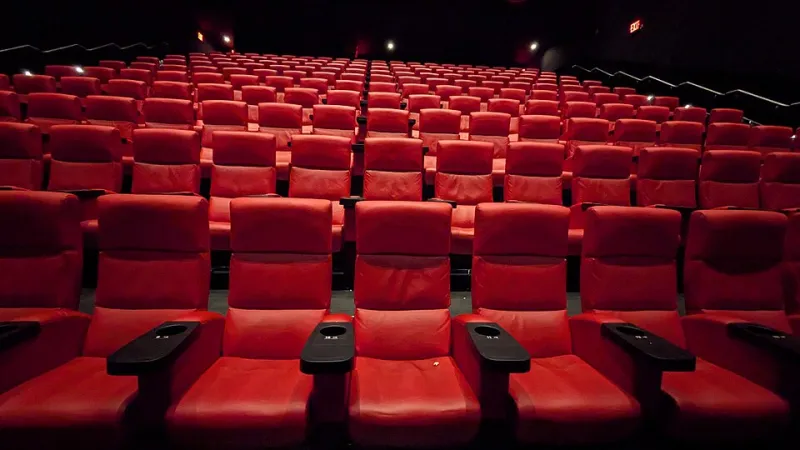
Photo: Eden, Janine and Jim from New York City, CC BY 2.0, via Wikimedia Commons
Next time you're scrolling through a theater listing or a Netflix menu, do yourself a favor and clock the runtimes. You'll notice something weird pretty fast. A huge chunk of mainstream films land somewhere between 88 and 100 minutes. Not 75. Not 130. Right in that window. It's almost like someone set a timer and told Hollywood to stay inside the lines.
They kind of did.
The Number Behind the Number
Film critics and casual viewers tend to talk about runtime as an artistic choice — a director's vision, a story's natural pace. And sure, that's part of it. But there's a much colder, more mechanical reason why so many studio films end up hovering around that 94-minute mark.
It comes down to how movie theaters actually make money.
A standard multiplex runs films on rotation. Each screen needs to fit multiple showings per day, and the more showings you can squeeze in, the more ticket sales and — crucially — concession revenue a theater generates. Concessions aren't a side hustle; they're often where theaters make the majority of their actual profit. A longer film means fewer daily screenings, which means fewer people walking past the popcorn counter.
When you factor in pre-show advertising and trailers (typically 15 to 20 minutes of buffer before the feature even starts), a 94-minute film plus previews lands around the two-hour mark. That's a clean, schedulable block. Theaters can run four or even five showings a day on a single screen without the math getting messy. Push the runtime past 110 or 120 minutes and you start losing a full showing. Lose a showing, lose a revenue cycle. Studios know this. They've always known this.
What Attention Science Actually Says
Here's where it gets interesting, because the theater scheduling argument doesn't fully explain why audiences prefer films in that range — and they do, at least historically.
Cognitive research on sustained attention has pointed to roughly 90 minutes as a rough boundary for focused engagement without significant mental fatigue. That's not a hard wall, but it's a real trend. Your brain is genuinely working harder to track characters, plot, and emotional beats than it does during passive scrolling. Two hours of that is doable. Three hours starts requiring a different kind of commitment.
This is why event films — your Avengers: Endgames, your Interstellars, your Dune: Part Twos — can push past the two-and-a-half-hour mark and still pack theaters. Audiences self-select for those. They're going in prepared, hyped, and mentally signed up for the long haul. But a mid-budget thriller or a romantic comedy asking for 145 minutes of your Tuesday night? That's a harder sell. The runtime itself becomes a barrier.
Studios quietly do the math on this. A film that's 20 minutes too long isn't just risking audience restlessness — it's potentially trimming its own box office ceiling by limiting who's willing to commit.
Streaming Threw the Rulebook Out the Window
And then Netflix happened. And then HBO Max. And then all the rest of them.
Streaming doesn't have a concession stand. It doesn't have a scheduling grid. Nobody's timing a rotation. Which means the entire structural logic that kept films clustered around that 90-to-100-minute window just... evaporated.
The results have been fascinating and, depending on who you ask, occasionally disastrous.
Netflix originals have swung wildly on runtime — some clocking in under 80 minutes, others stretching past two and a half hours with zero theatrical pressure to trim. The Irishman ran three and a half hours. Bird Box hit 124 minutes. Meanwhile, some of their lighter fare lands closer to 85. There's no house style, no invisible ceiling.
What streaming platforms do have, though, is data. And a lot of it. They can see exactly where viewers pause, rewind, or — the real killer metric — stop watching entirely. That dropout data is essentially a runtime audit happening in real time, across millions of viewers, for every single piece of content.
The early internal findings from platforms (the ones that occasionally leak or get referenced in earnings calls) suggest that streaming viewers are actually more tolerant of longer runtimes in some genres and less tolerant in others. A prestige drama can hold attention past two hours. A comedy or thriller that meanders past 100 minutes starts losing people fast. The sweet spot isn't one number anymore — it's a moving target that shifts depending on genre, platform, and even what time of day someone's watching.
The Invisible Edit Room
Here's the part that should probably make filmmakers nervous: streaming data doesn't just influence future projects. It's starting to influence current ones.
There are credible reports — and some on-record acknowledgments — of streaming platforms using engagement data to inform decisions about sequel pacing, episode structure, and yes, film runtimes. If the data shows a consistent drop-off at the 88-minute mark for a certain type of film, that information flows back into development conversations. It becomes a soft constraint, the same way theater scheduling was a soft constraint for decades.
The mechanism changed. The pressure didn't.
Why Any of This Matters to You
You might be thinking: who cares? A movie is as long as it needs to be. And honestly, that's the right instinct. The best films don't feel long or short — they feel right. Parasite runs 132 minutes and barely registers. Plenty of 90-minute films feel endless.
But understanding the economic and algorithmic forces shaping runtime helps explain a lot of the frustrations people have with modern movies — why studio films often feel like they end abruptly, why streaming originals sometimes feel bloated, why certain genres almost never get the breathing room they might deserve.
The clock isn't just measuring the story. It's measuring the business model around the story. At T7400, we're all about finding the numbers hiding inside the things you thought were purely creative — and runtime might be the most consequential invisible number in all of Hollywood.
Next time a movie wraps up and you think that felt a little rushed or that could've been tighter, you're not imagining it. Someone, somewhere, was watching a different kind of clock.