Who's Watching at 3 A.M.? Inside the Streaming Economy Nobody Plans For
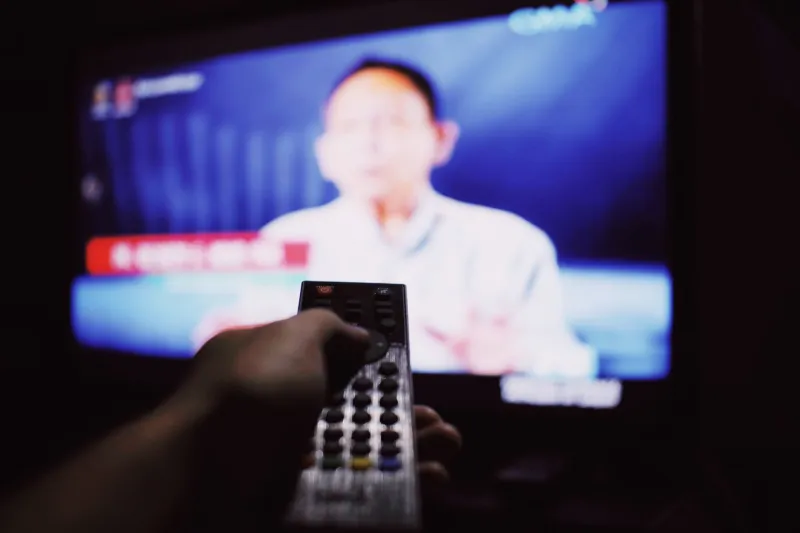
There's a version of America that only exists after midnight. The lights are off, the notifications have stopped, and somewhere in a dark living room in Ohio, a 34-year-old is watching her ninth consecutive episode of a show she doesn't even like anymore.
Nobody in the streaming industry is designing for her. And that might be the strangest blind spot in modern entertainment.
The Hours Nobody Counts
Ask any streaming executive about their audience and you'll hear about prime time. Evening hours, weekend binges, the Sunday night comfort watch. The entire architecture of these platforms — autoplay queues, thumbnail carousels, "continue watching" rows — is built around the assumption that you're awake, relaxed, and choosing.
But a meaningful slice of viewing happens between 1 and 5 a.m., and it doesn't follow any of those rules. This is the audience of night-shift workers decompressing after a 12-hour shift, parents pacing with infants, chronic insomniacs, and the increasingly common 3 a.m. scroller who never intended to open the app in the first place.
The industry doesn't talk about them much. Overnight viewership is hard to monetize, hard to advertise against, and awkward to put in a shareholder deck. But it's real, it's large, and it watches very differently than the rest of us.
What People Actually Watch at 3 A.M.
Here's the thing about late-night viewing: it's rarely about the show.
Prime time viewing is about novelty and anticipation. Overnight viewing is about familiarity. Ask around and you'll hear the same pattern again and again — people rewatching The Office for the tenth time, drifting through Friends reruns, or putting on a nature documentary they've already seen twice. Not because it's exciting. Because it's safe.
There's a reason comfort shows dominate the overnight hours. When your brain is running on fumes, plot twists feel like work. What you want is something with a predictable rhythm, familiar faces, and low emotional stakes. The 3 a.m. viewer isn't chasing a story — they're chasing a feeling of being less alone in a dark room.
It's why sitcom laugh tracks, of all things, have quietly become the soundtrack of the loneliest hours of the American night.
The Timestamp That Tells On You
Here's where it gets interesting. Streaming platforms know, with eerie precision, not just what you watch but when. And that timestamp is a surprisingly accurate portrait of your life.
A viewing history full of 2:30 a.m. sessions on weeknights? That's likely a new parent or an overnight worker. A sudden shift from evening viewing to 4 a.m. viewing? That's often a life event — a breakup, a job loss, a health scare. Data scientists at these companies have reportedly noticed that changes in viewing time-of-day can be among the earliest signals of major life disruption, sometimes before anything else in the account changes.
In other words, the hour you hit play can be more revealing than anything you watch afterward. A personality quiz based on your favorite genre is party trivia. The fact that you've watched 40 minutes of television every night this week at 3:15 a.m. is a diary entry you didn't know you were writing.
Why Platforms Mostly Ignore It
Given how much these companies love data, why hasn't the overnight audience become a design priority?
A few reasons. First, advertising — the engine behind cheaper streaming tiers — is worth dramatically less at 3 a.m., when impressions are few and ad inventory is thin. Second, there's no obvious product to build. You can't recommend your way out of insomnia, and a "late night mode" that just dims the interface doesn't move subscription numbers.
Third, and maybe most importantly, nobody wants to admit the scale of it. An industry that sells relaxation and escape doesn't love the idea that a big chunk of its usage comes from people who can't sleep.
That said, small signals are emerging. Sleep timers — once a niche feature on podcast apps — have started appearing on video platforms. Some interfaces quietly deprioritize intense thrillers in overnight sessions. Nothing official, nothing branded. Just a quiet acknowledgment that the person on the other end of the screen might not be okay.
The Number That Explains the Habit
Which brings us back to the idea at the heart of this site: sometimes a single number explains an entire behavior.
For the overnight viewer, that number is 3. Not a price point, not an episode count — an hour. It's late enough that the day has fully failed to end, early enough that hope for sleep is still technically alive. It's the hour when the algorithm meets the insomniac, and neither of them knows quite what to do with the other.
And it's the hour that reveals something the streaming industry rarely says out loud: for a lot of people, television stopped being entertainment a long time ago. It became company.
The next time your app asks "Are you still watching?" at 3:47 a.m., understand what it's really doing. It's not checking if you're awake. It's the closest thing the digital world has to a hand on your shoulder — and for millions of Americans, that faint question in the dark is the only one they get all night.