The Last Time America Agreed on Anything: A Group Chat About Channel 5
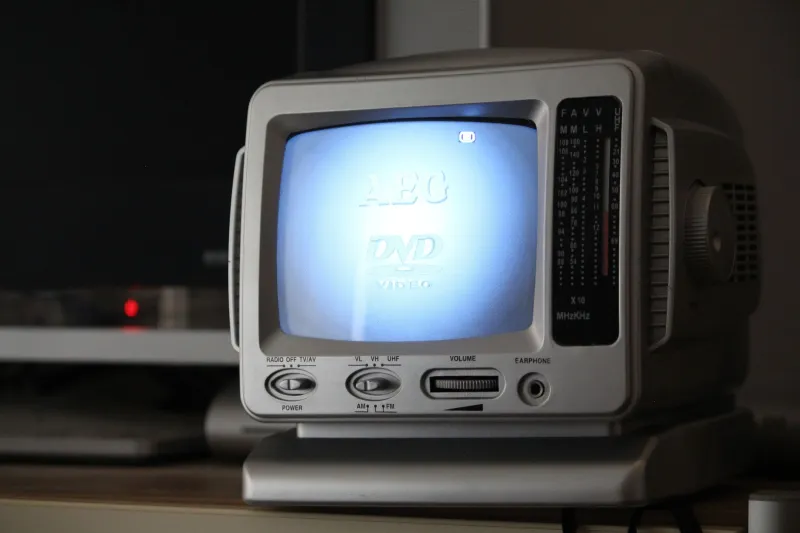
Ask your parents what channel the local news was on when they were kids. They won't hesitate. Channel 4. Channel 7. Channel 5. Whatever it was, it lives in their heads rent-free, right next to their childhood phone number and the jingle for a car dealership that closed in 1994.
That's not a small thing, when you think about it. It means that for a few decades, nearly every American household was running the same mental map. A shared grid. A common language. And we traded it for... twelve streaming apps and a note in our phones titled 'passwords (do not share).'
The Dial Was a Contract
Here's what made the old system work: the number didn't belong to you. It belonged to everyone. Channel 5 in Cleveland meant something specific, and if you moved to Denver, you learned the new local arrangement the same way you learned the new weather. The dial was boring, rigid, and completely universal — which turned out to be the secret ingredient.
Because when everyone knows where things live, culture gets easy. Monday night meant one thing. 'Did you see it last night?' was a functional question with a functional answer. You didn't need a group chat poll to figure out which platform someone was using. There was one platform. It was the TV. It was on channel 5.
The TV Guide — that physical magazine that lived on the coffee table like a family Bible — was arguably the most-read document in the country for a stretch there. Everyone was reading from the same page. Literally.
Then the Map Shattered
Streaming didn't just replace the dial; it atomized it. First it was Netflix, one app, easy. Then every network pulled its catalog back to build its own castle. Now the average US household juggles somewhere around four subscriptions, plus the free ones with ads, plus the one your brother-in-law shares, plus the service you signed up for to watch one documentary and forgot to cancel.
And here's the kicker: the same show moves. Your favorite series hops platforms based on licensing deals the way a free agent switches teams. The channel number used to be permanent. Now the location of the content itself is a lease.
So what did we memorize instead of numbers? Passwords. Twelve of them, minimum, each with its own lowercase-number-symbol requirements, each rotated on a schedule by some corporate security policy you never agreed to in spirit. Or you did what everyone actually does: one password for everything, stored in a note, guarded like a state secret.
The Rise of the Default
Something subtler happened too. The old dial demanded a decision — you turned the knob, you picked. Today's interfaces are built around making the decision for you. Autoplay kicks in before you've finished reading the synopsis. The homepage reshuffles itself around your watch history. The row labeled 'Because you watched...' is doing more curating than any programming executive ever did.
We used to navigate by map. Now we navigate by suggestion. And honestly, some nights that's a relief — decision fatigue is real, and nobody wants to spend forty minutes scrolling to end up watching 'The Office' again anyway. But there's a trade-off. When the machine picks, ten million people get the same pick. That's not shared culture. That's parallel isolation: everyone watching the same thing, alone, with no idea their neighbor is doing it too.
What We Actually Lost
It's not nostalgia for static or rabbit ears. It's nostalgia for legibility. The old system had a flaw you could see — you knew exactly what you were missing and exactly where to find it. The new system hides its edges. There's no way to know what's not on your apps. There's no 'channel 13' that might have something weird on it. Discovery now runs through an algorithm that knows your taste better than your spouse does, but can't explain itself.
Maybe that's why QR codes at restaurants, login codes texted to your phone, and 'scan to continue' moments feel so exhausting. Every one of them is a tiny re-authentication with a world that no longer comes pre-labeled. The numbers didn't disappear. They just went private. Everyone's got their own grid now — their own subscriptions, their own passwords, their own algorithm — and nobody's grid matches.
The dial was a small, dumb thing. But it was the last interface America shared. Everything since has been a mirror with your name on it.